Title 24 Requirements for an ADU in California
Accessory Dwelling Units have become a common way to add living space to California properties. Whether the ADU is detached, attached to the main house, or created by converting a garage, it must comply with the applicable California Energy Code, Title 24 Requirements.
The important point is that not every ADU is treated the same way. Under the 2025 Energy Code, the compliance approach depends largely on whether the project is considered new construction, an addition, or an alteration.

How Is Your ADU Classified?
The first step is determining how the Energy Code classifies the project. This affects which requirements and CF1R forms apply.
| ADU TYPE | ENERGY CODE CLASSIFICATION | TYPICAL EXAMPLE | GENERAL COMPLIANCE APPROACH |
|---|---|---|---|
| NEW DETACHED ADU | Newly constructed building | New backyard cottage | New-construction requirements |
| ATTACHED ADU | Addition | New unit connected to existing house | Addition requirements |
| GARAGE CONVERSION | Addition | Existing unconditioned garage converted to living space | Addition requirements |
| EXISTING CONDITIONED-SPACE CONVERSION | Alteration | Existing finished room converted to ADU | Alteration requirements |
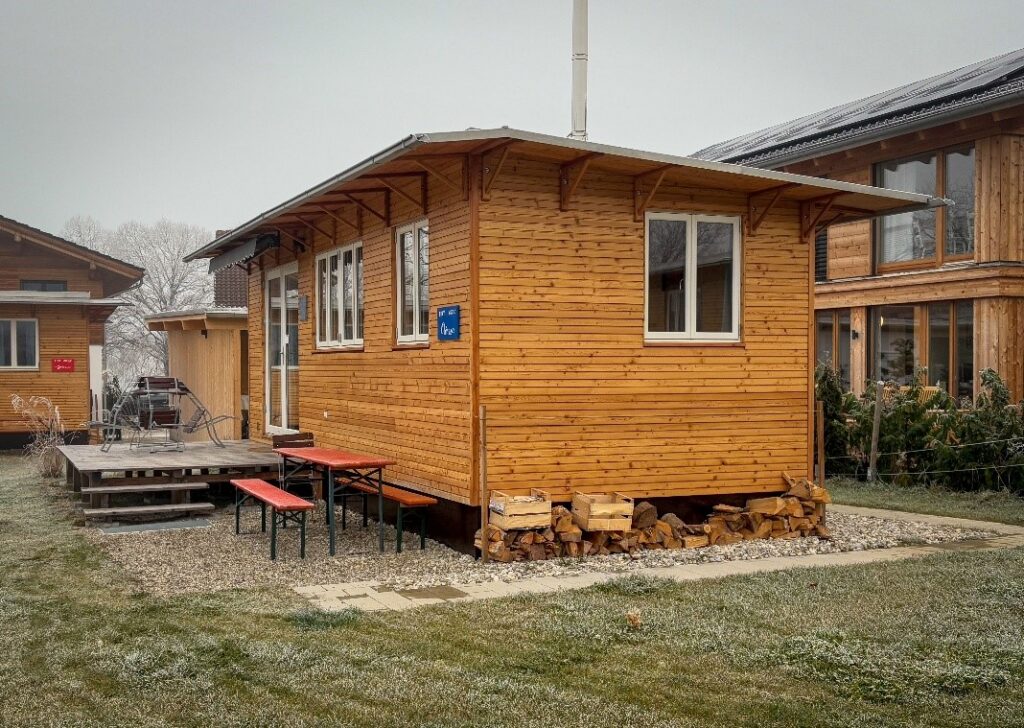
A newly constructed detached ADU is treated as a new single-family building. An attached ADU or conversion of previously unconditioned space generally falls under the addition requirements. Converting existing conditioned space is typically treated as an alteration.
What Does the Title 24 Report Review?
The CF1R report evaluates the energy-related features of the proposed ADU. For a newly constructed detached ADU, the analysis can cover most of the same systems found in a new home.
| BUILDING FEATURE | WHAT IS REVIEWED | TYPICAL PLAN INFORMATION | WHY IT MATTERS |
|---|---|---|---|
| BUILDING ENVELOPE | Walls, roof, floor and insulation | Sections and construction notes | Controls heat gain and loss |
| WINDOWS AND DOORS | Size, U-factor and SHGC | Window schedule | Affects heating and cooling loads |
| HVAC | Equipment type and efficiency | Mechanical plans | Major part of energy performance |
| WATER HEATING | System type and efficiency | Plumbing or equipment schedule | Affects overall energy use |
| VENTILATION | Whole-house and local exhaust | Mechanical notes | Required for indoor-air quality |
Providing clear plans and specifications makes the energy analysis easier and reduces the chance of revisions during permit review.
HVAC and Ventilation Requirements
Mini-split and multi-split heat-pump systems are commonly used for ADUs and may be used to comply with the Energy Code. However, installation requirements still apply, and some systems may trigger Energy Code Compliance field verification and diagnostic testing.
| SYSTEM ITEM | TYPICAL REQUIREMENT | POSSIBLE VERIFICATION | COMMON ADU APPLICATION |
|---|---|---|---|
| MINI-SPLIT HEAT PUMP | Compliant efficiency ratings | Refrigerant-charge verification may apply | Small detached ADU |
| DUCTED HVAC | Duct insulation and sealing | Duct-leakage testing may apply | Larger ADU |
| WHOLE-HOUSE VENTILATION | Required airflow | Airflow verification may apply | New detached ADU |
| KITCHEN EXHAUST | Required airflow and sound rating | ECC verification may apply | ADU kitchen |
Newly constructed detached ADUs must meet the mandatory indoor-air-quality ventilation requirements regardless of their size.

Do ADUs Need Solar Panels?
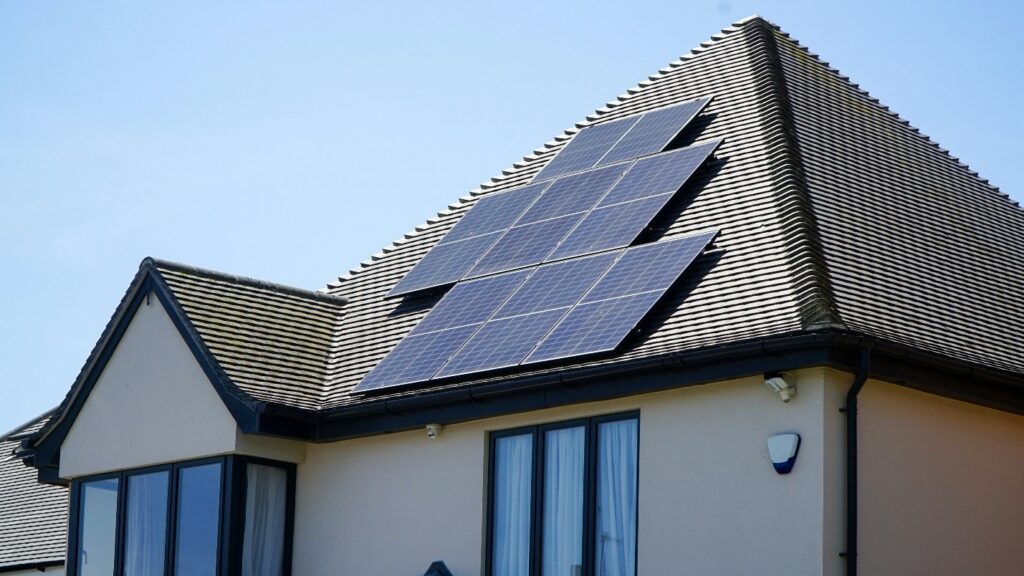
A newly constructed detached ADU may be subject to the solar photovoltaic requirements that apply to newly constructed single-family buildings. The required PV modules do not necessarily have to be installed directly on the ADU; under the 2025 Energy Code, qualifying new modules may be added elsewhere on the same residential lot, including to an existing PV system when permitted by the utility.
| ADU SITUATION | SOLAR MAY APPLY? | POSSIBLE APPROACH | IMPORTANT CONSIDERATION |
|---|---|---|---|
| NEW DETACHED ADU | Yes, when required by code | PV installed on ADU | Roof area and orientation |
| EXISTING HOME ALREADY HAS PV | Yes | Add modules to existing system | Utility approval |
| ATTACHED ADU ADDITION | Depends on applicable requirements | Evaluated as an addition | Project scope matters |
| EXISTING CONDITIONED-SPACE CONVERSION | Usually treated as alteration | Depends on altered systems | Review exact scope |
What About Battery and Electric-Ready Requirements?
New detached ADUs can also be subject to battery-energy-storage-ready and electric-ready provisions. For example, if gas equipment is proposed for space heating, water heating, cooking, or clothes drying, electrical provisions may need to be included so the equipment can be converted to electric in the future. Battery-ready requirements also apply to newly constructed ADUs in certain cases, although exceptions exist, including some projects with electrical service rated at 125 amps or less.
Which CF1R Form Is Used?
The correct CF1R depends on how the ADU is classified and whether field verification is required.
| PROJECT TYPE | TYPICAL CF1R CATEGORY | MAIN PURPOSE | REGISTRATION MAY BE REQUIRED? |
|---|---|---|---|
| NEW DETACHED ADU | Newly Constructed Building | Full new-building compliance | Yes |
| ATTACHED ADU | Addition / Alteration | Compliance for newly added area | Yes |
| GARAGE CONVERSION | Addition / Alteration | Compliance for newly conditioned area | Yes |
The 2025 Energy Code provides separate compliance forms for newly constructed buildings, additions, alterations, and space-conditioning alterations.
v What Should You Submit for an ADU Title 24 Report?
For most ADU projects, the energy consultant will need the architectural plans, project address, building orientation, window information, insulation details, HVAC system, water heater, and basic project scope.
If some equipment has not yet been selected, preliminary information can often be used for the draft report and updated before finalization.
v Ready to Submit Your ADU Project?
Send us your ADU plans and a short description of the proposed work. We will review the project, determine the appropriate compliance approach, and let you know if additional information is needed.
No upfront payment is required. You can review the draft CF1R report for your ADU before payment.