What Is a Title 24 Report, and When Do You Need One?
Anyone planning a new home, ADU, addition, garage conversion, or major remodel in California could be potentially asked to provide a Title 24 report as part of the permit process.
For many homeowners, the term is unclear. Is it a form, an inspection, or an energy calculation? In simple terms, it is the documentation used to show that a project meets California’s energy-efficiency requirements
What Does Title 24 Mean?
Title 24 is the California Building Standards Code. When a city asks for a “Title 24 energy report,” it usually means Title 24, Part 6, also called the California Energy Code.
The code can affect several parts of a residential project:
| BUILDING FEATURE | WHAT IS REVIEWED | WHY IT MATTERS | TYPICAL IMPACT |
|---|---|---|---|
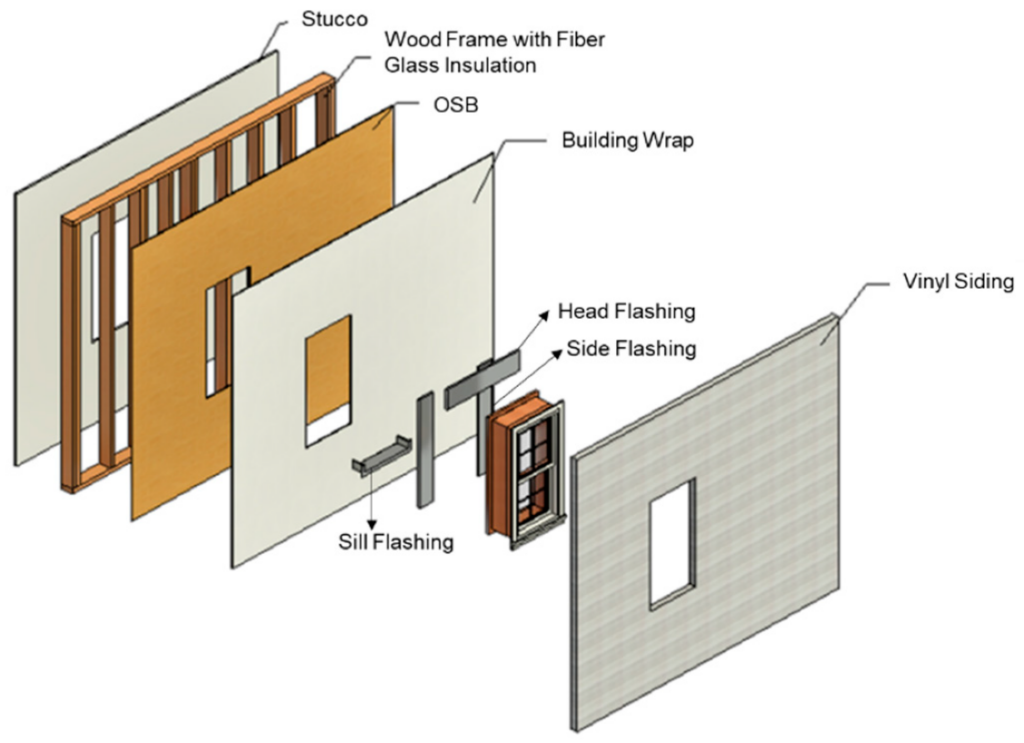
| INSULATION | Walls, roofs, ceilings, and floors | Reduces heat transfer | May affect assembly details |
| WINDOWS | U-factor, SHGC, size, and orientation | Controls heat loss and solar gain | May affect window selection |
| HVAC | Equipment efficiency and ductwork | Reduces energy use | May affect system design |
| WATER HEATING | Equipment type and efficiency | Reduces energy consumption | May affect product selection |
What Is a Title 24 Report?
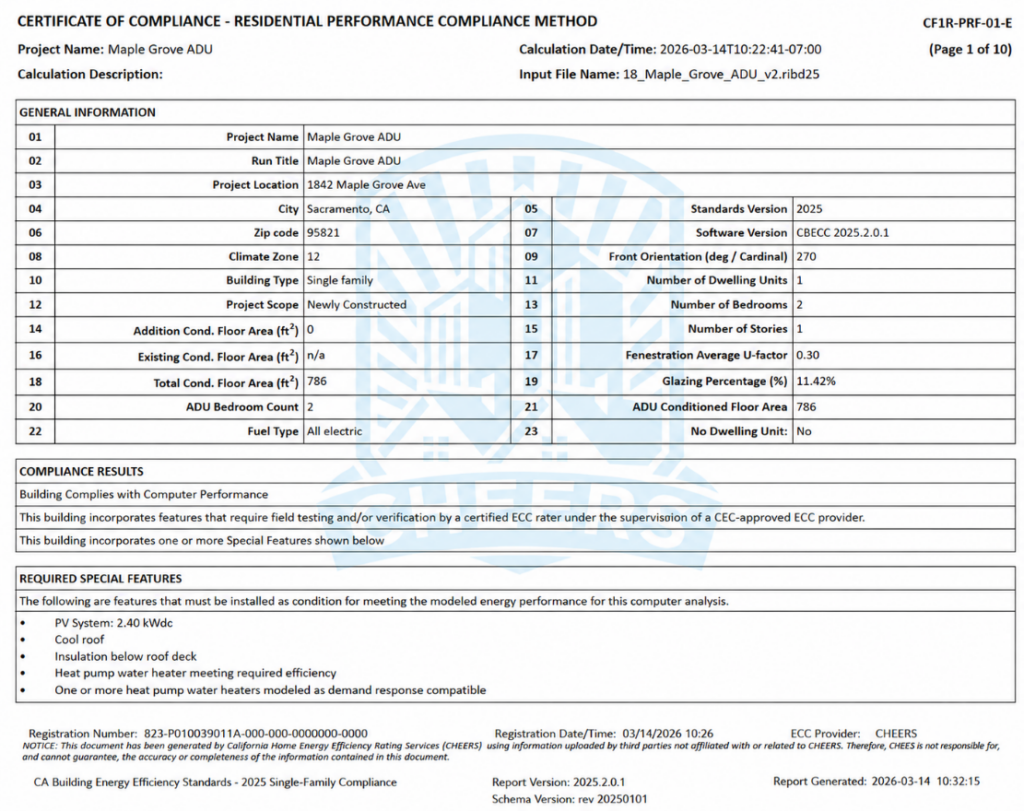
A Title 24 report is a set of energy calculations and compliance forms prepared from the project plans.
The consultant reviews the building size, orientation, insulation, windows, HVAC system, ducts, ventilation, and water heater. The final package may include a CF1R Certificate of Compliance.
| INFORMATION REVIEWED | PURPOSE | COMMON SOURCE | EXAMPLE |
|---|---|---|---|
| BUILDING DIMENSIONS | Establishes floor area and geometry | Floor plans | Room and wall dimensions |
| ORIENTATION | Determines solar exposure | Site plan | North arrow |
| WINDOWS AND DOORS | Measures glazing performance | Schedules | U-factor and SHGC |
| MECHANICAL SYSTEMS | Evaluates energy use | Equipment schedules | HVAC and water heater |
Which Projects Commonly Need One?
Projects such as new homes, ADUs, additions, garage conversions, and certain major alterations commonly require a Title 24 CF1R report. The exact form depends on the project scope and the energy-related features being added, replaced, or modified.
| PROJECT TYPE | USUALLY REQUIRED? | MAIN AREAS REVIEWED | TYPICAL EXAMPLE |
|---|---|---|---|
| NEW HOME | Yes | Full building envelope and systems | New single-family residence |
| ADU | Yes | Envelope, HVAC, ventilation, water heating | Detached backyard ADU |
| ADDITION | Yes | New walls, roof, windows, and HVAC | Bedroom or kitchen addition |
| REMODEL | Sometimes | Depends on the scope | Window or HVAC replacement |
| GARAGE CONVERSION | Yes | Insulation, windows, ventilation, and HVAC | Garage converted to living space |

What Information Is Needed?
To prepare an accurate CF1R report, the consultant needs basic project details, architectural drawings, and information about windows, insulation, HVAC, and water heating. Complete and clearly labeled plans help reduce questions, revisions, and permit delays.
| REQUIRED ITEM | WHY IT IS NEEDED | WHERE IT APPEARS | COMMON ISSUE |
|---|---|---|---|
| PROJECT ADDRESS | Identifies climate zone and jurisdiction | Cover sheet | Missing ZIP code |
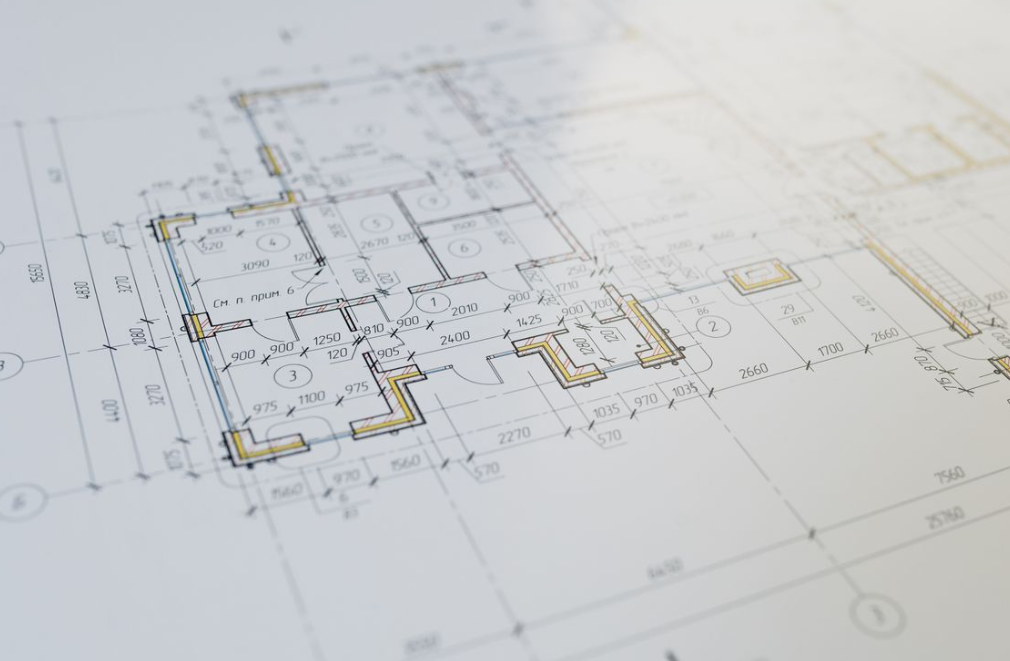
| FLOOR PLANS | Shows area and geometry | Plan set | Missing dimensions |
| ELEVATIONS AND SECTIONS | Show envelope construction | Architectural drawings | Incomplete wall or roof details |
| WINDOW SCHEDULE | Provides sizes and ratings | Schedule sheet | Missing U-factor or SHGC |
| HVAC INFORMATION | Defines system efficiency | Mechanical plans | Equipment not yet selected |
| WATER HEATER INFO | Defines the WH efficiency | Mechanical plans | Equipment not yet selected |
A complete plan set makes the process faster, but preliminary plans can often be reviewed first.
What If the Design Does Not Pass?
If the initial Title 24 calculation does not pass, it does not necessarily mean the project needs a major redesign. In many cases, compliance can be achieved by making a few targeted changes, such as improving window performance, increasing insulation, selecting more efficient HVAC equipment, or revising duct specifications.
We at Title24Deal compare different options and recommend the most practical combination based on cost, construction feasibility, and the project’s design goals. The objective is to bring the project into compliance without creating unnecessary changes or expenses.
| POSSIBLE CHANGE | PURPOSE | EXAMPLE | LIKELY RESULT |
|---|---|---|---|
| BETTER WINDOWS | Reduce heat gain and loss | Lower U-factor | Better envelope performance |
| MORE INSULATION | Improve thermal resistance | Higher wall or roof R-value | Lower heating and cooling demand |
| MORE EFFICIENT HVAC | Reduce energy use | Higher-efficiency heat pump | Improved compliance |
| BETTER DUCTS | Reduce distribution losses | Improved sealing and insulation | Higher system efficiency |
The goal is to find practical changes that meet the code without creating unnecessary construction costs.
Title 24 vs. CALGreen
Title 24, Part 6 (CF1R forms) addresses energy efficiency, while CALGreen, Part 11 covers broader measures such as water conservation, construction waste, indoor air quality, and EV readiness. For residential projects, the CALGreen checklist is usually prepared and coordinated by the architect or building designer, with input from engineers and contractors as needed; the local building department confirms compliance during plan review and inspection.
| REQUIREMENT | CODE PART | MAIN FOCUS | TYPICAL DOCUMENT |
|---|---|---|---|
| TITLE 24 ENERGY CODE | Part 6 | Energy efficiency | CF1R and related forms |
| CALGREEN | Part 11 | Green-building measures | CALGreen checklist |
A city may request both. We at Title24Deal only provide the CF1R related forms.
When Should You Order the Report?
The best time is after the plans show the building dimensions, windows, insulation, and mechanical systems, but before the permit set is finalized. Preparing the report early makes it easier to coordinate the required energy measures with the drawings.
Ready to Submit Your Project?
Send us your plans and a short description of the work. We will review the documents and let you know whether anything else is needed.
No upfront payment is required. You can review the draft before payment.